What it is
A mirror for the autonomic nervous system.
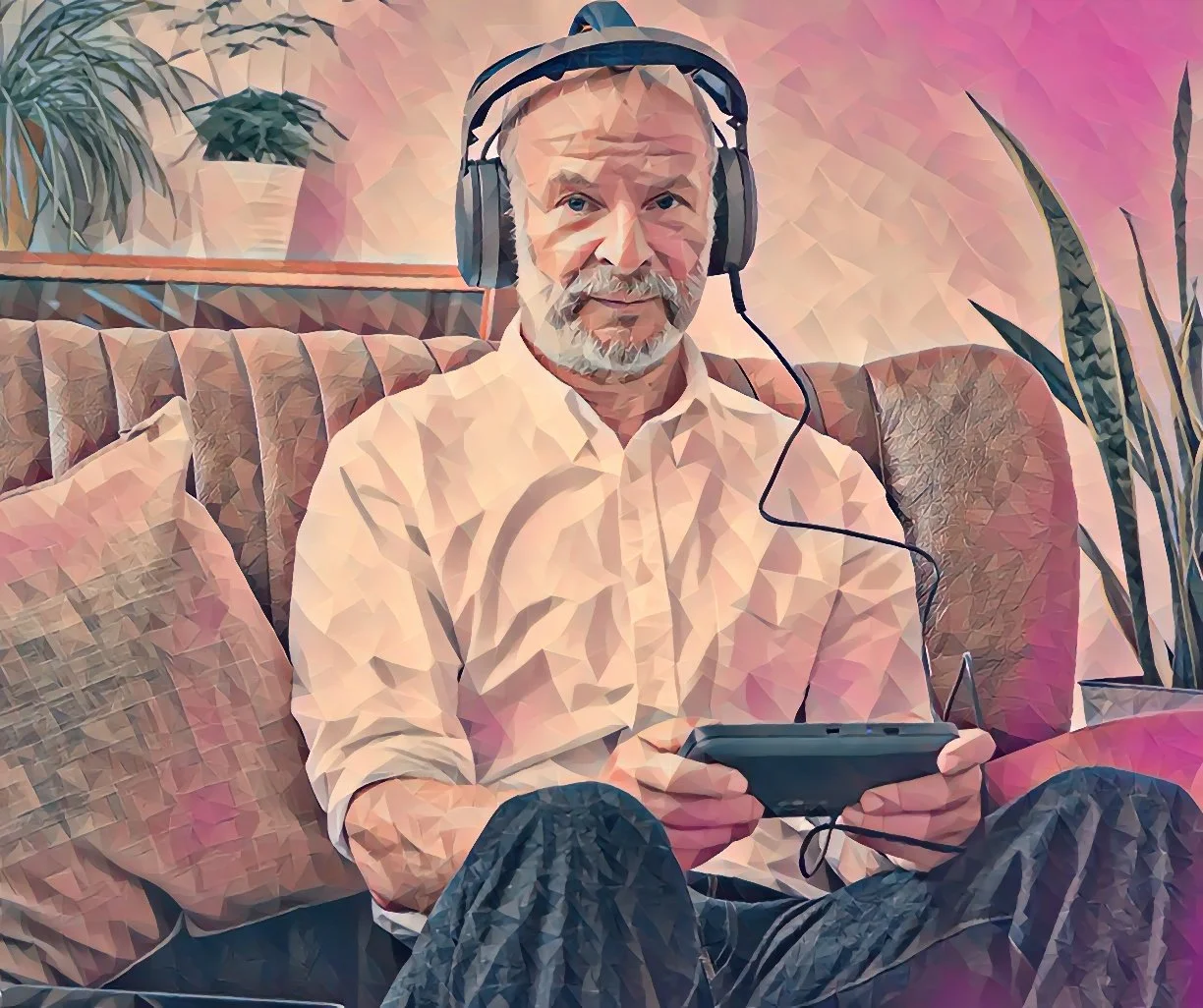
Biofeedback training uses non-invasive sensors to measure what your nervous system is doing right now, heart rate variability, breath pacing, skin conductance, and shows it back to you in real time. Once you can see the pattern, you can learn to change it.
Most regulation work is internal: you breathe, you sit, you hope something shifted. Biofeedback removes the guesswork. The screen, sound, or light tells you the moment your body crosses into a calmer state.
What gets measured gets trainable.
How it works
Closed loop regulation.
Three signals tell most of the story. Heart rate variability shows the balance between your sympathetic and parasympathetic systems, high HRV means flexible, low HRV means stuck. Respiration rate shows how fast you're breathing. Skin conductance reflects emotional arousal in the moment.
During a session, you breathe, sit, or move through a guided protocol while those three signals are visible on screen or audible as gentle tones. The body learns by feedback: when something shifts the signal in the right direction, you feel it, see it, and remember it.
Over four to eight sessions, baseline HRV typically rises, baseline breath rate drops, and the threshold for sympathetic activation gets harder to cross. The nervous system becomes more adaptive at rest.
→ Read more in Field Notes: Heart Rate Variability Explained
Who it's for
Best for the analytical regulator.
Biofeedback sessions tend to land hardest for:
- People who like data and want to see their nervous system in numbers
- People who've tried meditation or breathwork and aren't sure it's working
- High performers, athletes, executives, recovery, who want to train resilience
- People managing chronic stress, anxiety, or sleep dysregulation
Less ideal for: people who feel anxious watching numbers about their body, or who want a softer, more immersive experience. If real-time data feels like one more thing to measure, start with
sound science or
vibroacoustic therapy instead.
A session looks like
Sensors on. Pattern revealed.
You arrive 10 minutes early to settle. Sensors go on at the chest, finger, and sometimes earlobe, light, non-invasive, off in under a minute. We pull up a real-time readout on a soft display you can see or close your eyes to.
A facilitator walks you through breath pacing and short guided shifts while you watch the signals respond. Often a second modality runs in parallel, vibroacoustic, sound, or light, so you can watch the modality work on you, not just trust that it is.
The session ends with a short read-out of what changed: HRV before vs. after, time in coherent state, a takeaway pattern to practice at home.